

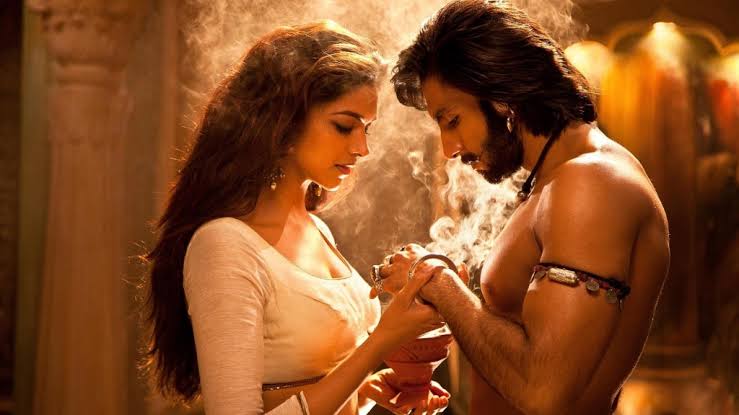
Bollywood News: fans looking back at Sanjay Leela Bhansali’s filmography will find Goliyon Ki Raasleela Ram-Leela standing out for its combination of romance, violence, music and visual grandeur.
Released in 2013, the film brought together Ranveer Singh and Deepika Padukone as Ram and Leela, two lovers belonging to rival clans. The story was loosely inspired by William Shakespeare’s Romeo and Juliet, but Bhansali transported the central conflict into a fictional Gujarati town dominated by generations of rivalry and gun violence.
The film was filled with the elements that audiences had come to associate with Bhansali — elaborate costumes, vibrant colours, lavish sets, dramatic music and carefully composed frames. Yet beneath all that beauty was a tragic love story in which the protagonists were constantly surrounded by violence.
A Gujarati World Built On Guns And Rivalry
The fictional town of Ranjaar becomes an important character in Ram-Leela.
Ram belongs to the Rajadi clan, while Leela is part of the Saneda family. Their communities have been locked in conflict for generations, with guns and revenge becoming an ordinary part of everyday life.
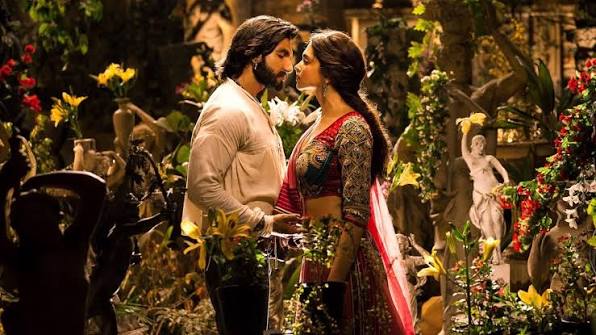
Against this backdrop, Ram and Leela's attraction becomes an act of rebellion. Their relationship challenges the rules imposed by their families and forces both characters to choose between inherited loyalties and personal love.
The film's world is deliberately exaggerated, combining humour, sexuality, violence and colourful celebrations. According to Gulf News' recent retrospective, this visual excess is one of the reasons the film can still be remembered even when some parts of its storytelling feel uneven.
Ranveer Singh And Deepika Padukone’s Chemistry
One of the biggest talking points surrounding Ram-Leela was the chemistry between Ranveer Singh and Deepika Padukone.
Before the film's release, Ranveer himself had described their chemistry as the driving force of the story. He also called the Bhansali project one of his most special films at the time.
Their performances gave the romance its energy. Ram and Leela were not presented as perfectly restrained lovers. Their relationship was impulsive, passionate and often complicated by anger, jealousy and the violence surrounding them.
That intensity became one of the film's defining features and helped establish Ranveer and Deepika as one of Bollywood's most talked-about on-screen pairs.
Lahu Munh Lag Gaya Introduced Their Romance
Music played a crucial role in Ram-Leela, and “Lahu Munh Lag Gaya” remains one of the film's most memorable songs.
The song captures the first spark between Ram and Leela amid colour, celebration and Holi festivities. The sequence uses Bhansali's trademark visual richness to transform a romantic encounter into a large-scale cinematic spectacle.
The combination of traditional Gujarati influences, elaborate choreography and the chemistry between the two actors made the song an important part of the film's identity.
Nagada Sang Dhol Turned Emotion Into Celebration
Another unforgettable song from the film was “Nagada Sang Dhol”.
Featuring Deepika Padukone in a high-energy garba performance, the song became one of the film's major musical highlights. Its large-scale choreography and traditional Gujarati-inspired setting perfectly matched Bhansali's visual approach.
The song also reflected an important part of Leela's character. Even when the story around her was filled with restrictions and conflict, dance became one of the ways she expressed herself.
The Gulf News retrospective also highlighted “Nagada Sang Dhol” alongside “Lahu Munh Lag Gaya” and “Ang Laga De” as songs that have remained memorable years after the film's release.
Where Ram-Leela Became Uneven
Despite its visual strengths, Ram-Leela was not without flaws.
The first half moves with considerable energy as Ram and Leela meet, fall in love and attempt to escape the rivalry between their families. However, the second half spends more time on clan politics, power struggles and repeated confrontations.
The Gulf News retrospective argues that the film's tonal shifts and crowded visual style sometimes make its emotional core harder to connect with.
Yet these imperfections are also part of why the film remains interesting to revisit. It is a movie that makes bold creative choices, even when those choices do not always work equally well.
The Tragic Ending Of Ram And Leela
The tragedy of Ram-Leela follows the basic emotional structure of Romeo and Juliet.
Ram and Leela ultimately refuse to allow their families to control the final decision about their relationship. Their ending becomes an act of defiance against the generations of violence surrounding them.
The climax is heavily stylised, with Bhansali using slow motion, symbolism and dramatic imagery to turn the lovers' final moments into a visual tableau.
For some viewers, the sequence works primarily because of its beauty, while others may find that the elaborate presentation keeps the emotional impact at a distance.
Ram-Leela Was A Commercial Success
Despite controversies surrounding the film before and around its release, Ram-Leela opened strongly at the box office.
The Indian Express reported that the film collected around ₹33 crore during its opening weekend, with strong day-to-day figures. It also crossed ₹50 crore within its first week despite protests at some locations.
The film also received a UA certificate from the Central Board of Film Certification before release.
These numbers helped establish the film as a significant commercial release of 2013.
A Film That Helped Shape Ranveer And Deepika’s Journey
Ram-Leela also became important in the professional journeys of both Ranveer Singh and Deepika Padukone.
The two actors later reunited with Bhansali in Bajirao Mastani, although their characters were different from Ram and Leela. Deepika subsequently worked with Bhansali again in Padmaavat, while Ranveer played Alauddin Khilji in the period drama.
Their collaboration with Bhansali therefore developed into one of the filmmaker's most recognisable actor-director associations.
Why Ram-Leela Still Gets Remembered
More than a decade after its release, Ram-Leela continues to attract attention because it represents a particular kind of Bollywood filmmaking — ambitious, colourful and unapologetically theatrical.
The film may have an uneven narrative, but its music, performances, costumes and cinematography have given it a lasting visual identity.
Most importantly, Ranveer Singh and Deepika Padukone's performances remain central to its appeal. Their chemistry gives the film its emotional pulse, while Bhansali's direction turns their romance into a larger-than-life tragedy.
Goliyon Ki Raasleela Ram-Leela may not be a flawless film, but it remains an important chapter in modern Bollywood — one where love, rivalry, music and spectacle came together in a distinctly Sanjay Leela Bhansali style.
Click here for the latest news from Bollywood, Hollywood, South Film Industry, Bhojpuri and TV world… Click here to join the Facebook Page, Twitter Page, YouTube page, and Instagram of Bollywood Mascot!

Leave a Comment