

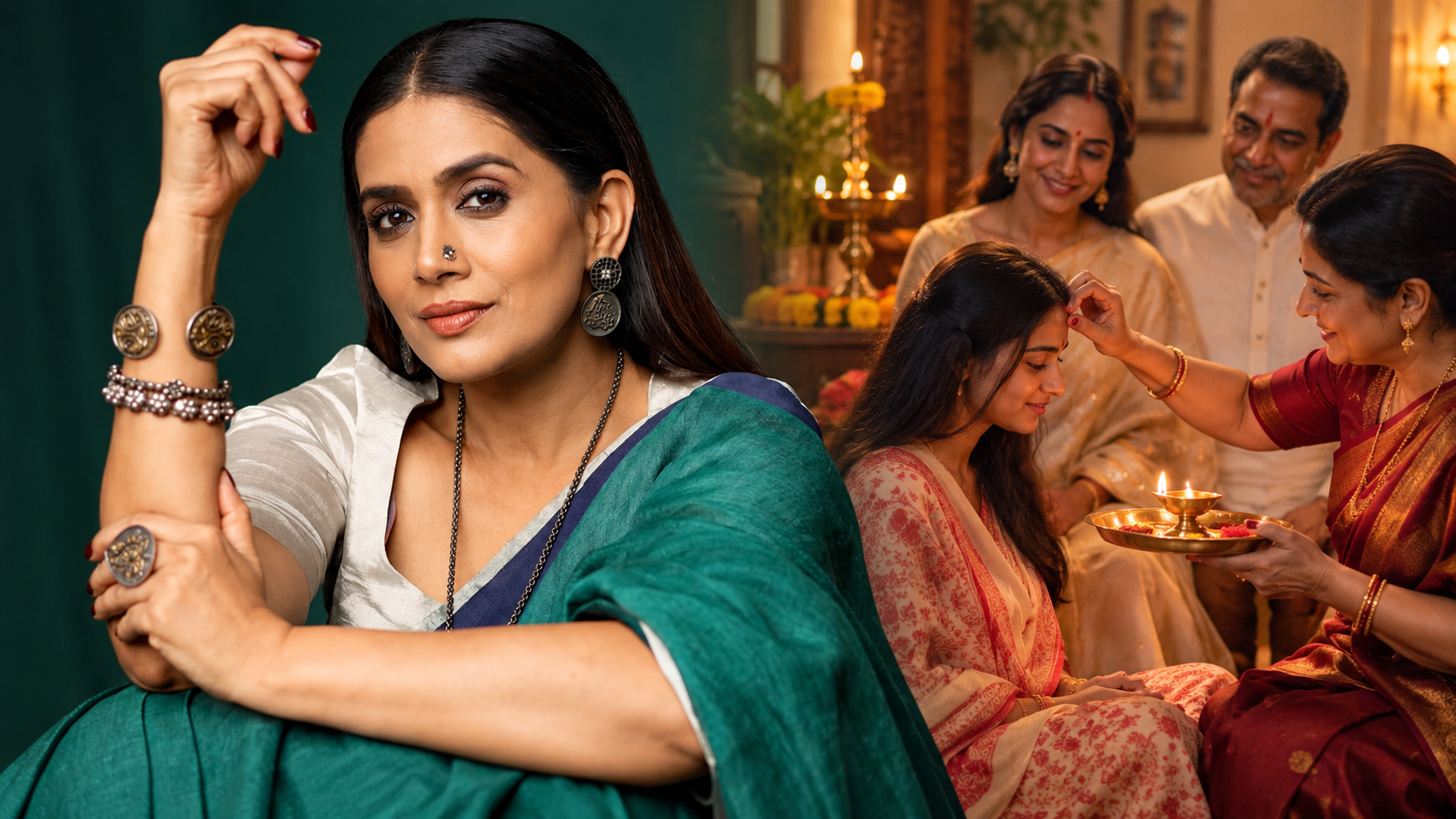
Actress Sonali Kulkarni has shared a personal story about her first menstrual period, offering a glimpse into her family's traditions and the menstrual practices she experienced while growing up. The actress revealed that sanitary pads were not provided in her household and that women in the family used soft cloth taken from old sarees instead.
In an interview with Hauterfly, Kulkarni spoke about her personal and professional life, recalling how her family approached menstruation. Her account has drawn attention to the different ways Indian households understand periods, combining traditional practices with personal beliefs and family customs.
Sonali Kulkarni Reveals What Her Family Used During Periods
Recalling her experience, Kulkarni explained that her family used reusable pieces of soft fabric instead of commercially available sanitary pads.
According to the actress, women in the household were taught how to use the cloth, wash it and reuse it. The fabric was not simply discarded after one use; it was cleaned and kept for subsequent menstrual cycles.
Her account highlights a menstrual practice that has existed in many households, particularly where disposable menstrual products were not readily available or were not part of the family's established routine.
Reusable cloth can be used as a menstrual absorbent when it is clean, properly washed, completely dried and stored hygienically. Access to safe menstrual products and accurate information about menstrual hygiene remains important for women's health and comfort.
Mother and Aunt Performed Aarti When She Got Her First Period
One of the most memorable parts of Kulkarni's account was the way her family celebrated her first period.
The actress recalled that her mother and aunt performed her aarti when she began menstruating. Rather than treating the occasion as something shameful, they welcomed the milestone with affection and warmth.
Kulkarni remembered feeling loved and appreciated as the two women looked at her with affection and expressed happiness that she was growing up.
Her recollection presents a different perspective from the stigma and restrictions that some girls experience when they begin menstruating. In her case, the family ritual became a positive childhood memory associated with acceptance and affection.
Sonali Kulkarni Says Periods Should Not Become an Excuse
During the interview, Kulkarni also shared her thoughts about the way menstruation is discussed in society. She suggested that periods should not automatically be treated as an excuse for avoiding responsibilities.
Menstruation is a normal biological process, but individual experiences can differ considerably. Some people experience mild discomfort, while others may deal with significant cramps, fatigue or other symptoms that affect their daily activities.
Open conversations about periods can help reduce embarrassment and misinformation. They can also encourage families, schools and workplaces to approach menstrual health with greater understanding.
The broader conversation around menstruation includes both the need to challenge social stigma and the importance of recognising when menstrual symptoms require rest or medical attention.
Sonali Kulkarni Also Discussed an Uncomfortable Film Industry Experience
The actress reportedly discussed another difficult experience during the same interview, this time concerning her professional life.
According to the Aaj Tak report, Kulkarni spoke about an incident in which a director allegedly called her to a building on the pretext of narrating a film's story. She recalled that a bed was present in the narration room and said she decided to leave the project after the experience.
The account adds another dimension to her interview, which touched on personal memories as well as challenges encountered during her career.
Why Her Story Has Sparked Interest
Kulkarni's account brings together two subjects that continue to generate discussion in India: menstrual health and the social attitudes surrounding periods.
Her experience illustrates how families can have very different approaches to menstruation. While some communities associate the first period with rituals and celebrations, others impose restrictions or discourage open discussion.
The availability of safe menstrual products, access to reliable health information and the freedom to discuss periods without embarrassment are important aspects of menstrual well-being.
By sharing a personal memory, Kulkarni has contributed to a wider conversation about how menstruation is experienced within families and how these experiences can shape a person's understanding of the subject.
Her story is also a reminder that individual experiences should not be generalised to every household. Traditions vary across families and communities, and menstrual practices can change with greater awareness and access to resources.
Click here for the latest news from Bollywood, Hollywood, South Film Industry, Bhojpuri and TV world… Click here to join the Facebook Page, Twitter Page, YouTube page, and Instagram of Bollywood Mascot!



Leave a Comment