


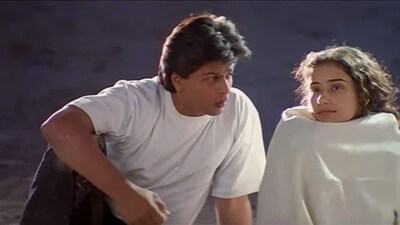
When Dil Se arrived in theatres in 1998, expectations were high. The film brought together Shah Rukh Khan, Manisha Koirala and acclaimed filmmaker Mani Ratnam, while its music was composed by AR Rahman. It also featured the unforgettable song Chaiyya Chaiyya, which became a nationwide sensation.
Despite these attractions, the film did not perform well at the Indian box office. Made on a reported budget of over Rs. 11 crore, its domestic theatrical earnings were not enough to make it a commercial success. Interestingly, the film performed well in overseas markets and gradually developed a strong reputation among cinema lovers.
Today, Dil Se is considered an important film in Shah Rukh Khan's career. But what went wrong when it was originally released? Here are five possible reasons behind its box office failure.
1. Audiences Expected a Romantic Shah Rukh Khan
During the 1990s, Shah Rukh Khan was becoming one of Bollywood's most popular romantic heroes. Films such as Dilwale Dulhania Le Jayenge had established his image as the charming lover audiences wanted to see on screen.
However, Dil Se offered something very different. Although romance was central to the story, the film also explored political conflict, insurgency and terrorism. Shah Rukh's character, Amar, was not the conventional romantic hero audiences had come to expect.
This change in his screen image may have made it difficult for some viewers to connect with the film.
2. The Trailer Highlighted Political Drama
The film's promotional campaign also presented a darker side of the story. Rather than focusing primarily on its romantic angle, the trailer highlighted political unrest and the dangerous circumstances surrounding Manisha Koirala's character.
For mainstream Hindi film audiences of that period, this was an unusual combination. The promotional material may not have communicated the film's emotional and romantic dimensions effectively.
Interestingly, overseas audiences responded more positively to the film. It found appreciation in international markets, including the UK and Japan, where its unusual storytelling attracted attention.
3. The Tragic Ending Disappointed Audiences
One of the biggest reasons often associated with Dil Se's disappointing theatrical performance is its tragic climax.
During that period, mainstream Bollywood films frequently offered happy endings, with audiences expecting the lead characters to overcome obstacles and find happiness together.
Mani Ratnam took a different approach. The film ends with Amar and Meghna dying together in an explosion, leaving viewers with a tragic conclusion rather than a conventional romantic resolution.
The film's dialogue writer, Tigmanshu Dhulia, later suggested that audiences may not have accepted the death of the lead characters. In an interview with The Lallantop, he said the climax could have disappointed viewers even though the film was progressing well.
4. The Film's Subject Did Not Find a Wider Audience
Dil Se was not a straightforward love story. Set against the backdrop of insurgency in Assam, it explored political conflict, terrorism and the emotional consequences of violence.
The subject was ambitious and required audiences to engage with complex themes. At the time, such a combination was not necessarily an easy sell for a mainstream Hindi film starring one of the country's biggest romantic heroes.
The film also presented a complicated female character. Manisha Koirala played Meghna, a woman connected to a militant movement, whose personal history and motivations gradually emerge.
While this complexity is now appreciated by many viewers, it may have limited the film's immediate mass appeal.
5. A Complex Storyline Made It Difficult to Connect
Another possible reason was the film's layered narrative. On one side, it followed Amar's intense attraction towards Meghna. On the other, it explored her connection with a larger political and militant movement.
The story moved between romance, obsession, political conflict and national identity. These elements gave the film its distinctive character, but they also made it different from conventional commercial entertainers.
Some viewers may have found it difficult to connect emotionally with the relationship between the lead characters, particularly as their bond developed in unusual circumstances.
Dil Se Eventually Became a Cult Classic
Although Dil Se did not succeed commercially in India upon release, its reputation changed over time. Its music, cinematography, performances and bold storytelling helped it find a dedicated audience.
The film's songs, especially Chaiyya Chaiyya and Ae Ajnabi, remain popular. AR Rahman's music became one of its biggest strengths, while Mani Ratnam's direction gave the film a distinctive cinematic identity.
The film also received National Film Awards for Best Cinematography and Best Audiography.
Interestingly, filmmaker Nikkhil Advani once revealed that Dil Se is Shah Rukh Khan's favourite film from his own career, despite its disappointing domestic box office performance.
More than two decades after its release, Dil Se remains an example of how a film can fail commercially at first but earn lasting appreciation for its artistic ambition. Its box office result may have been disappointing, but its place in Indian cinema has only grown stronger with time.
Click here for the latest news from Bollywood, Hollywood, South Film Industry, Bhojpuri and TV world… Click here to join the Facebook Page, Twitter Page, YouTube page, and Instagram of Bollywood Mascot!


Leave a Comment