


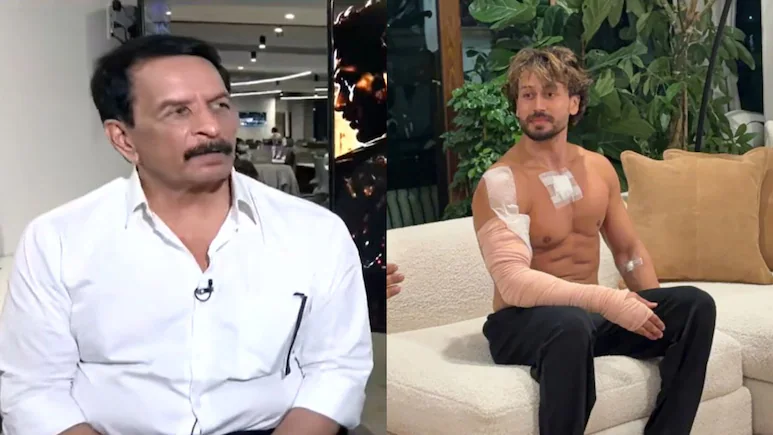
The recent firing incident involving actor Tiger Shroff has brought Bollywood’s long and troubled history with Mumbai’s underworld back into focus. As concerns about the safety of film personalities grow, former Mumbai Police encounter specialist Pradeep Sharma has shared details of how gangsters allegedly obtained information from within the film industry during the 1990s.
In an interview with NDTV, Sharma recalled a period when figures such as Dawood Ibrahim, Chhota Shakeel and Abu Salem wielded considerable influence over Mumbai’s entertainment industry. According to him, the underworld did not rely only on threats and phone calls. It also depended on people within the industry who could provide information, communicate with gangsters and help negotiate settlements.
How Bollywood Insiders Allegedly Shared Information
According to Pradeep Sharma, several gangsters had their own contacts within Bollywood. These individuals allegedly passed on information about actors, filmmakers and developments inside the industry.
Sharma cited the example of a man named Bobby Anand, whom he said supplied information to Abu Salem. He also recalled another individual who allegedly worked for both Abu Salem and Chhota Shakeel before being killed by Abu Salem.
The former police officer suggested that these insiders played an important role because gangsters operating from outside India could not directly observe everything happening in Mumbai. Instead, they often relied on information supplied by people on the ground.
His account offers a glimpse into how an informal network of contacts allegedly operated between the film industry and organised crime during that period. However, these details are based on Sharma’s recollections and should be understood as his account of events.
The Same People Allegedly Helped Settle Disputes
Sharma also described how some individuals allegedly performed two roles within the network. They would pass information to gangsters and, when disputes arose, help negotiate settlements between the criminal groups and people from the film industry.
According to Sharma, people who had established connections with particular gangsters became known as intermediaries. Those facing pressure or receiving alleged extortion calls would sometimes approach these contacts in the hope of resolving the situation.
He explained that individuals could become associated with specific gangsters, making them the people others approached when a threat or dispute involved a particular group.
This arrangement, as described by Sharma, meant that information and negotiations could pass through the same network. It also illustrates the atmosphere of fear that reportedly surrounded parts of Bollywood during the height of the Mumbai underworld’s influence.
Tiger Shroff Firing Incident Revives Underworld Concerns
The interview comes after a firing incident involving Tiger Shroff in Mumbai’s Juhu area on October 18, 2026. The incident triggered renewed discussion about whether organised criminal groups are once again attempting to intimidate people connected with the entertainment industry.
The Lawrence Bishnoi gang was linked to the incident in reports, although claims made in connection with a crime must be distinguished from independently established facts.
The episode has also revived memories of earlier attacks and threats involving Bollywood personalities. During the 1990s and early 2000s, several actors, producers and filmmakers faced reported threats and extortion attempts linked to organised crime.
The relationship between Bollywood and the underworld was not limited to personal intimidation. Reports from that period also described criminal groups seeking influence over film financing, distribution and other commercial arrangements.
Why Gangsters Relied on People Within the Industry
Sharma’s account highlights the importance of local contacts to criminal networks whose senior figures were sometimes operating from abroad. According to him, gangsters often acted on the information provided by people who were physically present in Mumbai.
Those contacts could allegedly tell them what was happening inside the industry, identify people to approach and facilitate communication. In some cases, the same intermediaries reportedly helped arrange settlements after threats had been made.
The former officer’s remarks also underline a difficult aspect of investigating organised crime: information can travel through personal and professional relationships that are not immediately visible to investigators.
While Sharma described how these networks allegedly functioned in the past, his account does not establish that the same arrangements operate in exactly the same way today.
Bollywood’s Past Continues to Shape Present-Day Fears
The firing incident involving Tiger Shroff has once again raised questions about the security of film personalities and the methods used by criminal groups to exert pressure.
Sharma’s recollections provide historical context for those concerns, particularly the alleged role played by insiders who connected gangsters with people in the film industry. His comments also explain why intermediaries could become influential during a period when many Bollywood figures were reportedly reluctant to confront criminal groups directly.
Whether the current situation represents a return to the patterns of the 1990s remains a question for investigators and security agencies. What is clear is that the latest incident has reopened a chapter of Bollywood history that many in the industry would prefer to leave behind.
Click here for the latest news from Bollywood, Hollywood, South Film Industry, Bhojpuri and TV world… Click here to join the Facebook Page, Twitter Page, YouTube page, and Instagram of Bollywood Mascot!




Leave a Comment