


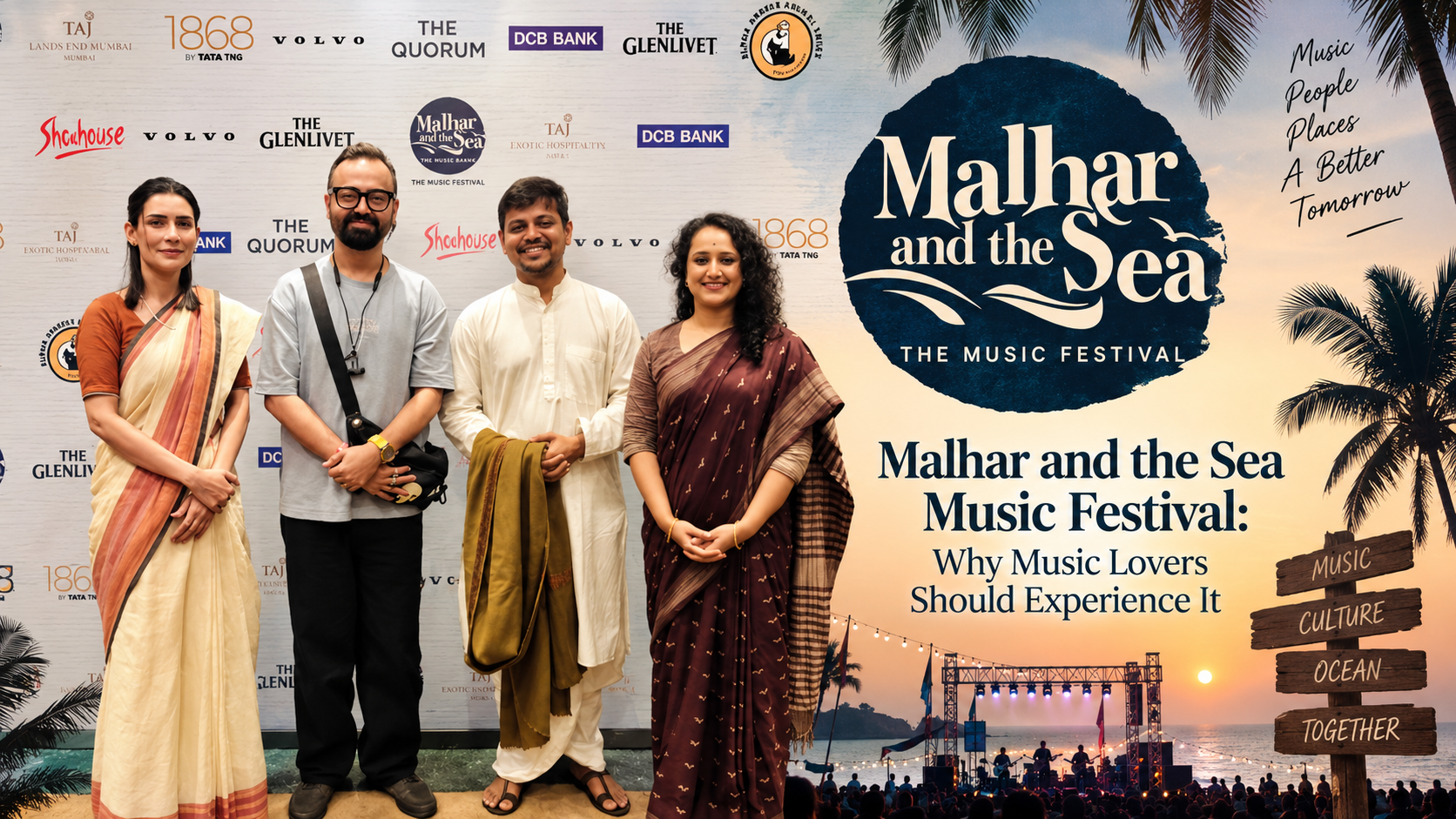
The Malhar and the Sea Music Festival has created a unique space for music lovers who want something beyond the usual concert experience. Set against the monsoon atmosphere of Goa, the festival brings together Indian classical music, Sufi, ghazals, devotional music, folk traditions and other musical forms in an intimate setting.
The third edition of the festival was held from July 24 to 26, 2026, at the Taj Exotica Resort & Spa in Benaulim, Goa. Organised by Showhouse, the festival was built around the theme “One India, Many Voices”, celebrating the diversity of India's musical traditions.
A Music Festival With a Different Experience
What makes the Malhar and the Sea Music Festival different is that it is designed as a residential musical experience rather than simply a series of stage performances.
The idea is to bring artists and audiences closer together while allowing people to enjoy music without the rush associated with large commercial concerts.
The Goa setting adds another layer to the experience. The monsoon, greenery and sound of the sea create a natural backdrop for performances that range from classical ragas to qawwali, ghazals and folk-inspired music.
The festival has increasingly become known for creating an atmosphere where audiences can listen, interact and enjoy the performances at a relaxed pace.
One India, Many Voices
The theme of the Malhar and the Sea Music Festival 2026 was “One India, Many Voices.”
The programming reflected that idea by bringing together several different traditions of Indian music.
The festival featured Dhrupad, one of the oldest surviving forms of Hindustani classical vocal music, alongside Carnatic music, khayal, thumri, bhajans, ghazals, qawwali and Marathi abhangs.
This variety allowed audiences to experience different musical traditions during the same weekend rather than focusing on just one genre.
Ustad Wasifuddin Dagar Opens the Festival
One of the highlights of the Malhar and the Sea Music Festival was a performance by Ustad Wasifuddin Dagar.
A prominent name in the Dagar tradition, he presented Dhrupad, a form of Hindustani classical music known for its depth, precision and meditative quality.
His performance was accompanied by Mohan Shyam Sharma on the pakhawaj, creating a powerful opening for the festival.
Dhrupad's connection with India's ancient musical traditions also fitted naturally with the festival's larger focus on India's diverse musical heritage.
The RaGa Sisters Bring Carnatic Music
The festival then moved into the world of Carnatic music with sisters Ranjani and Gayatri, popularly known as the RaGa Sisters.
Their performance included compositions connected with the monsoon and devotional traditions. They also performed an abhang associated with the musical heritage of Maharashtra.
Their set demonstrated how the festival moved naturally between classical traditions while keeping the audience connected to the emotional side of the music.
A Tribute to Sahir Ludhianvi
Another distinctive feature of the Malhar and the Sea Music Festival was the inclusion of musical theatre.
Actor and theatre artist Danish Husain presented Main Pal Do Pal Ka Shayar Hoon, an artistic tribute to legendary poet and lyricist Sahir Ludhianvi.
The production combined storytelling, theatre and live music while exploring Sahir's life and contribution to Hindi cinema.
Songs associated with Sahir's writing were incorporated into the performance, creating a bridge between theatre and music. It was also the first time the festival presented a musical theatre production.
Sufi Music Adds Another Dimension
The Malhar and the Sea Music Festival also celebrated India's Sufi musical tradition.
Shivam Bhardwaj and the Tasawwur Ensemble performed a selection of traditional Sufi compositions and popular favourites, creating one of the more energetic portions of the festival.
The audience joined in singing and clapping during several performances, demonstrating the ability of Sufi music to create an immediate connection between performers and listeners.
Shujaat Khan Brings the Sound of the Sitar
Ustad Shujaat Husain Khan was another major attraction at the Malhar and the Sea Music Festival.
The renowned sitar player delivered a performance that blended classical music with familiar compositions. His recital moved from an atmospheric opening towards more energetic passages and eventually included several popular songs.
The combination of sitar, voice and monsoon surroundings created one of the festival's memorable musical experiences.
Anup Jalota and Priyanka Barve
Day two of the festival featured several more performances.
Anup Jalota performed devotional favourites along with well-known Hindi songs, with Shweta Pandit accompanying him. His set moved between bhajans and popular classics, allowing audiences to experience both devotional and contemporary sides of his repertoire.
Classical vocalist Ronkini Gupta followed with khayal and thumri, while Priyanka Barve presented ghazals and Bollywood classics.
Together, the performances continued the festival's effort to connect different generations and styles of Indian music.
A Touch of International Music
The Malhar and the Sea Music Festival was not limited to Indian traditions.
Nadia Rebelo introduced audiences to Fado, the Portuguese musical tradition associated with longing, nostalgia and the sea. Her performance added an international dimension to the festival while still connecting naturally with Goa's Portuguese cultural history.
The festival also featured a tribute to The Beatles by the classic rock and blues band Wanted Yesterday.
This combination of Indian classical, devotional, Sufi, Western and Portuguese music helped create the festival's multi-genre identity.
Goa Makes the Festival Even More Special
The location is an important part of the Malhar and the Sea Music Festival experience.
Goa during the monsoon offers rain-filled skies, green landscapes and the sound of the sea, creating an atmosphere that naturally complements classical and acoustic music.
Rather than separating the music from its surroundings, the festival uses the environment as part of the experience.
That relaxed pace is one reason the event has developed a following among music enthusiasts looking for intimate performances instead of crowded commercial concerts.
Malhar and the Sea Music Festival: More Than Just a Music Festival
The Malhar and the Sea Music Festival combines music, art, food, hospitality and conversations in one setting.
A photography exhibition titled Rain Dogs by Rohit Chawla also ran alongside the 2026 festival, adding a visual-art element to the programme. Proceeds from the photographs were directed towards dog welfare charities.
The festival's organisers have indicated that the event will return to Goa and could eventually expand internationally, including destinations such as Sri Lanka and the Maldives.
Why Music Lovers Should Experience It
For anyone who enjoys Indian classical music, folk traditions, Sufi music, ghazals or simply discovering different forms of live performance, the Malhar and the Sea Music Festival offers something unusual.
Its biggest strength is its variety. One performance can take listeners into the world of Dhrupad, while another can introduce them to Carnatic music, qawwali, Fado or classic Bollywood songs.
Combined with Goa's monsoon atmosphere and an intimate residential format, the festival becomes more than a collection of concerts.
It becomes a slow, immersive musical journey—and that is what makes Malhar and the Sea Music Festival an experience worth discovering for serious music lovers.
Click here for the latest news from Bollywood, Hollywood, South Film Industry, Bhojpuri and TV world… Click here to join the Facebook Page, Twitter Page, YouTube page, and Instagram of Bollywood Mascot!


Leave a Comment