


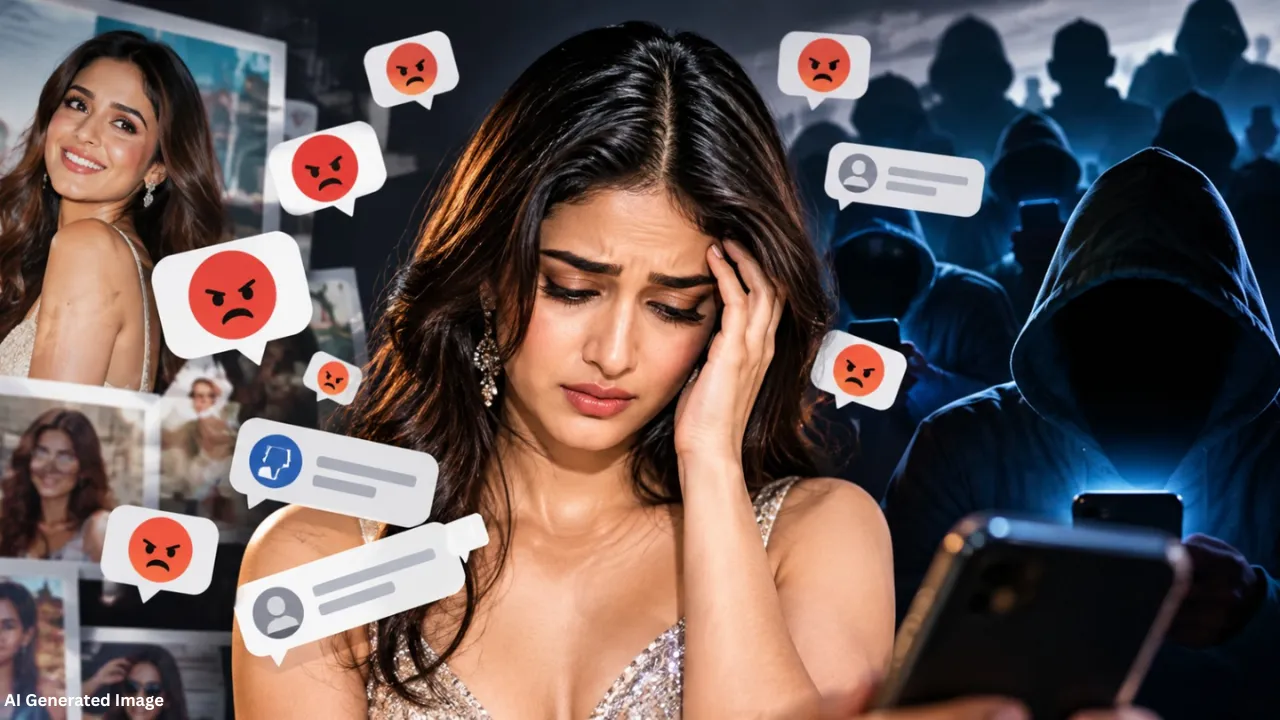
Social media has transformed the relationship between celebrities and their audiences. Fans can now comment directly on an actor’s Instagram post, react to a film announcement or discuss a celebrity’s personal life within seconds. However, this easy access has also created a culture where celebrities frequently become targets of online trolling.
Actors and other public figures are often criticised for their appearance, clothes, relationships, professional choices, age and even family decisions. In some cases, criticism may be genuine disagreement. In others, comments can cross into deliberate insults, harassment or repeated personal attacks.
So, why do people troll celebrities? There is no single explanation. Research and expert commentary point to several possible motivations and social factors.
Attention-Seeking Can Be a Major Factor
One reason people troll public figures is the possibility of receiving attention. Celebrities have large audiences, meaning even a provocative comment directed at a famous person can attract likes, replies and shares.
Research and educational material on trolling has identified attention-seeking, boredom, amusement and revenge among possible motivations. In some cases, trolls may specifically target highly visible public figures because they hope their comments will receive a reaction.
The larger the celebrity's online following, the greater the potential reach of a controversial comment. If fans respond angrily, the original post can receive even more visibility.
The Psychology Behind Online Trolling
Online behaviour can also be influenced by the environment in which people interact. Research examining trolling behaviour has found that negative mood and exposure to previous trolling can increase the likelihood of someone engaging in similar behaviour. The findings suggest that trolling is not necessarily limited to a fixed group of people who always behave this way.
This helps explain why negative discussions can sometimes escalate quickly. One insulting comment may encourage another person to respond with an even harsher remark, turning an individual criticism into a larger online pile-on.
The anonymity and distance provided by the internet can also make it easier for people to say things they might hesitate to say during a face-to-face interaction.
Why Are Celebrities Such Easy Targets?
Celebrities occupy a unique position because their professional lives are public. Their films, appearances, interviews and social-media posts are constantly discussed.
At the same time, audiences can develop a sense of familiarity with celebrities despite never meeting them personally. Psychologists describe this type of one-sided connection as a parasocial relationship.
Repeated exposure to a celebrity through films and social media can make that person feel psychologically familiar to an audience member. Recent psychological commentary notes that these relationships can create a strong feeling that people "know" a celebrity even though the relationship is not reciprocal.
This familiarity can sometimes lead to unrealistic expectations about how celebrities should behave.
When Fans Turn Into Anti-Fans
Not all online negativity comes from people who have always disliked a celebrity. Some criticism can come from former fans who feel disappointed or disconnected from someone they once followed closely.
Research discussed in analysis of online anti-fan communities found that some former fans developed resentment after feeling ignored, excluded or disconnected from influencers. Their sense of closeness could make disappointment feel more personal.
This is important because it shows that celebrity trolling is not always simply about hatred. In some cases, it can emerge from expectations created by a perceived relationship between the public figure and their audience.
Social Media Can Turn Trolling Into Entertainment
Another factor is the entertainment value of online controversy.
A celebrity's controversial photograph, statement or video can quickly become a topic of discussion. Once users begin commenting, others may join simply because the subject is trending.
Actor Ritabhari Chakraborty has previously described celebrity trolling as a kind of collective online entertainment. She pointed to the way one negative comment can encourage others to join a discussion, creating a snowball effect that can turn negativity into a trending topic or meme.
This means some people may participate in trolling not because they have a strong personal opinion about the celebrity, but because they want to participate in a viral conversation.
Body-Shaming and Personal Attacks
Celebrities are also frequently targeted over physical appearance. Weight, ageing, clothing, pregnancy and relationships can become subjects of online commentary.
A recent example came during a Bigg Boss 20 episode in which Salman Khan spoke about the way celebrities are mocked over appearance, ageing and weight. His comments came amid discussions about online trolling and remarks concerning Katrina Kaif's post-pregnancy appearance.
Such incidents highlight a broader issue: criticism of public work is different from repeatedly attacking someone's body or personal circumstances.
Is There Always a Specific Motive?
There is not necessarily one specific motive behind every trolling incident.
One person may be seeking attention, another may be expressing genuine disagreement in an unnecessarily aggressive manner, while someone else may simply be joining a viral conversation. Personal frustration, boredom, group behaviour and the desire to provoke a reaction can also contribute.
This is why it can be misleading to assume that every person making a negative comment has the same intention.
At the same time, celebrity criticism and trolling should not automatically be treated as identical. A review of a film, disagreement with an interview or criticism of a public decision can be legitimate. The distinction often lies in whether the discussion focuses on someone's public work or crosses into personal abuse and harassment.
Why Trolling Spreads So Quickly
The structure of social media can amplify negative content. Strong emotional reactions tend to generate more replies and engagement, while users may encounter the same controversy repeatedly as it moves between platforms.
Once a celebrity-related controversy starts trending, people who were previously unaware of it may join the discussion after seeing screenshots, short videos or posts without the original context.
This can create a cycle in which controversy generates attention, attention generates more comments and additional comments keep the controversy visible.
Celebrity Trolling Is a Complex Online Phenomenon
The reasons people troll celebrities are therefore varied. Attention-seeking, amusement, boredom, emotional reactions, group behaviour, parasocial expectations and the desire to participate in online trends can all play a role.
Celebrities are particularly visible targets because their professional and personal lives are regularly discussed in public. Social media has made that visibility even greater, allowing audiences to react instantly.
However, not every negative opinion is trolling, and not every troll necessarily has the same motivation. Understanding this distinction is important when discussing the growing culture of online criticism.
As celebrity and audience interactions continue to move increasingly onto social platforms, the boundary between public discussion and personal harassment will remain an important part of the conversation around internet culture.
Click here for the latest news from Bollywood, Hollywood, South Film Industry, Bhojpuri and TV world… Click here to join the Facebook Page, Twitter Page, YouTube page, and Instagram of Bollywood Mascot!

Leave a Comment