


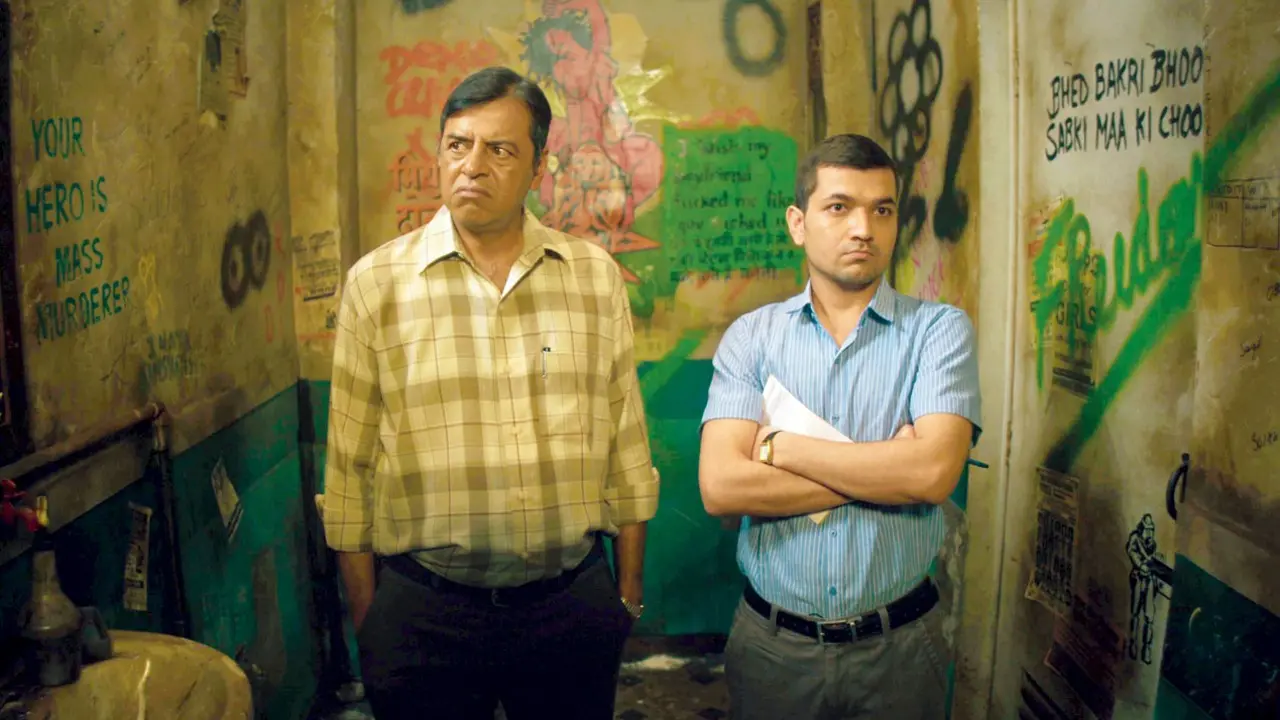
Young filmmaker Shivam Shankar has revealed the thought process behind setting his short film Bhed, Bakri, Bhoot inside a public restroom. While the location may initially appear unusual, it was actually born from the practical challenges faced by an emerging filmmaker trying to make a short film with limited resources.
Shankar explained that when he first wanted to make a short film, he understood that a single-location setup would make production more manageable. He had earlier considered locations such as a flat and a restaurant, but neither felt particularly exciting to him.
The idea of a restroom eventually stood out because it offered something much more than a convenient shooting location.
Why A Public Restroom Became The Film's World
According to Shankar, a public restroom is one of those rare spaces where people from different classes, backgrounds and cultures can cross paths. He saw it as an overlooked part of the modern Indian landscape.
The filmmaker also connected the location with the anonymous writing and graffiti commonly found on toilet walls. In Bhed, Bakri, Bhoot, those walls become a space where people leave behind their anger, frustrations, personal problems and opinions.
The film begins with a heartbroken brass-band musician writing an angry message about his former lover on the wall. Soon, other people start adding their own thoughts and complaints. What begins as a personal grievance gradually turns into a much larger conversation about society.
A Simple Restroom Becomes A Symbol
The central restroom in Bhed, Bakri, Bhoot is not merely a background location. It gradually becomes a metaphor for the society surrounding the characters.
As more people write on the walls, the amount of anger and commentary increases. However, the deteriorating condition of the restroom itself receives very little attention.
This contrast is at the heart of Shivam Shankar's filmmaking approach. People have plenty to say about others, society and the system, but there is little action when it comes to improving the space they themselves occupy.
Cinema Express, in its review, described the public washroom as an outlet for citizens' anger, desires and unfiltered opinions, noting how the film uses the confined setting to examine wider social frustrations.
Shivam Shankar Wanted To Reflect Society
Shankar has said that his intention was not to directly attack any particular person, religion, caste or political side.
Instead, he wanted the film to hold up a mirror to the environment he had grown up around. The filmmaker described the film as an attempt to start a conversation about the country and the way people express their opinions.
The restroom allows that conversation to unfold through anonymous writing. Everyone has something to say, but the people writing on the walls do not necessarily take responsibility for fixing the surroundings.
That idea gives Bhed, Bakri, Bhoot its distinctive social commentary.
From Personal Anger To Collective Frustration
One of the film's interesting elements is the way individual complaints slowly become collective noise.
A person enters the restroom with one problem and writes it on the wall. Someone else responds with another thought, and another person adds something completely different. The wall eventually becomes crowded with competing voices.
The format allows Shivam Shankar to explore how private frustration can become part of a much larger social conversation.
The film's 30-minute runtime keeps this concept contained within a single environment, while the ensemble cast represents different people passing through the same space.
An Award-Winning Short Film
Despite being an independent short film, Bhed, Bakri, Bhoot has already travelled through several international film festivals.
The film has been screened at events including the 29th Kurzfilmtage Winterthur, IFFSA Toronto, Tirana International Film Festival, Roma Short Film Festival, Tokyo International Short Film Festival, Yellowstone International Film Festival and Best of India Short Film Festival.
It has also received recognition at the festival level, including Best Short Film at IFFSA Toronto, Best Indian Short Film at the Yellowstone International Film Festival, Best Editing at the Tokyo International Short Film Festival and Second Best Film at IDSFFK.
Anurag Kashyap's Connection With The Film
The short film has also received support from established filmmakers Anurag Kashyap, Abhishek Chaubey and Navdeep Singh.
Kashyap's Oh Short Flips YouTube channel released Bhed, Bakri, Bhoot globally on September 24, 2026. The film became the third title to be showcased through the platform, which is designed to give independent short films a wider audience.
Shivam Shankar has also spoken about Kashyap's influence on his early career. According to Hindustan Times, Shankar reached out to Kashyap through Instagram and eventually got an opportunity to work with the filmmaker.
What Makes Bhed, Bakri, Bhoot Different
The unusual setting is ultimately what gives Bhed, Bakri, Bhoot its identity.
Rather than spending heavily on multiple locations and elaborate production design, Shivam Shankar turns a neglected public restroom into the film's entire world. The walls, graffiti, characters and deteriorating surroundings become storytelling tools.
The result is a short film that combines humour, discomfort and social observation while asking viewers to think about the gap between expressing opinions and actually taking responsibility.
With its festival recognition and digital release, Bhed, Bakri, Bhoot also highlights how emerging filmmakers can use limited resources creatively instead of allowing budget constraints to dictate the scale of their storytelling.
Click here for the latest news from Bollywood, Hollywood, South Film Industry, Bhojpuri and TV world… Click here to join the Facebook Page, Twitter Page, YouTube page, and Instagram of Bollywood Mascot!


Leave a Comment