


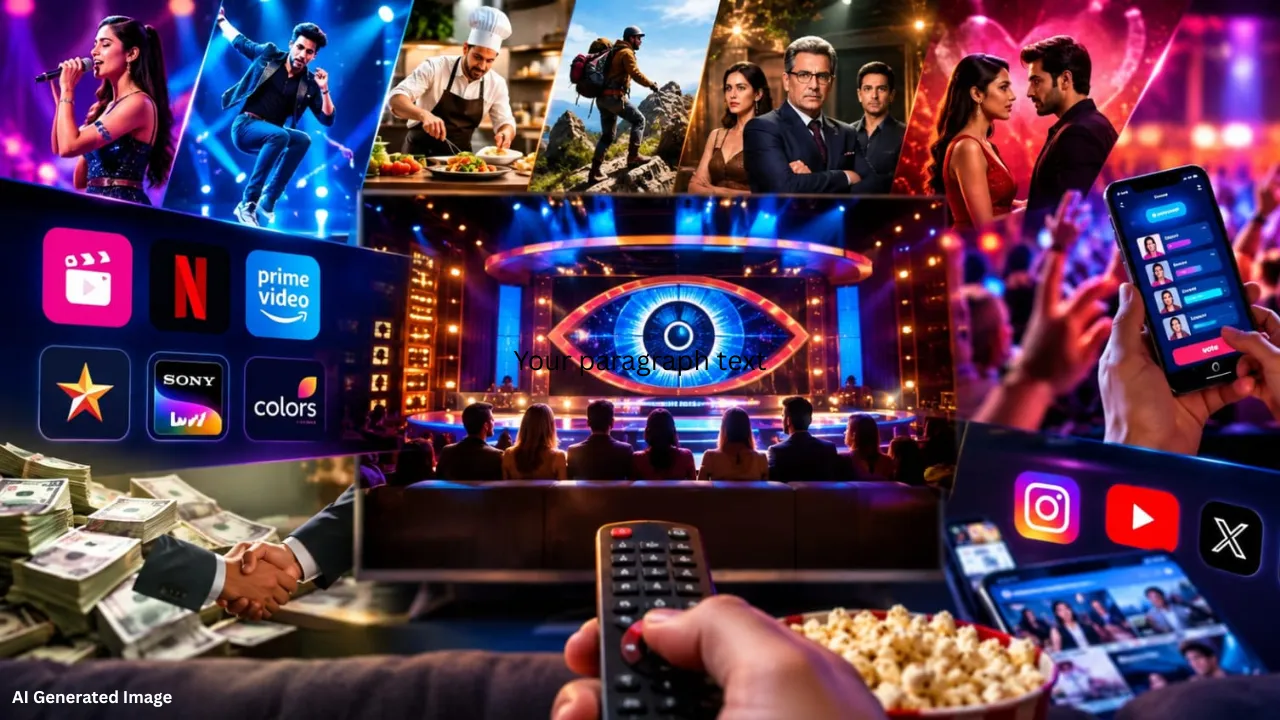
Reality shows have become one of the biggest forces in India’s entertainment industry. From television channels to OTT platforms, makers are increasingly investing in formats built around competition, celebrity personalities, strategy, relationships and audience participation.
Shows such as Bigg Boss, Lock Upp, Rise & Fall, The Traitors, Shark Tank India, Khatron Ke Khiladi and Laughter Chefs have demonstrated that viewers are willing to return regularly when a show creates conversation and unpredictability.
The growing popularity of these formats is not only about entertainment. There is also a strong business strategy behind the rise of reality shows.
Reality Shows Offer More Content in Less Time
One of the biggest advantages for producers is the production model. Unlike scripted films and fiction series, reality shows do not require a completely new storyline to be written for every episode.
A reality show generally operates from a prepared set, whether it is a house like Bigg Boss, a business environment like Shark Tank India or a specially designed competition arena.
Once the contestants enter the format, their interactions, arguments, friendships, performances and reactions naturally generate content. This can allow producers to create several weeks or even months of programming from a relatively concentrated production schedule.
Contestants Become the Content
In a scripted series, writers have to continuously develop characters and situations. Reality television works differently.
The contestants themselves become the central source of the story. A disagreement can become an episode highlight, a friendship can create an emotional storyline, while a competition can completely change the dynamics between participants.
This is particularly visible in shows such as Bigg Boss, where viewers follow contestants not just for tasks but also for their personalities, relationships and reactions to pressure.
That unpredictability gives reality formats an advantage because audiences cannot always predict what will happen next.
Influencers Have Changed the Reality TV Business
Another major change has been the entry of YouTubers, influencers and digital creators.
Earlier, reality television was largely dominated by television celebrities, actors and established public figures. Today, contestants can arrive with millions of followers of their own.
This gives producers an immediate audience base. When an influencer enters a reality show, their followers are likely to discuss their performance, share clips and participate in online conversations.
The show therefore benefits not only from television or OTT viewers but also from the contestant’s existing digital community.
Audience Participation Makes a Difference
Viewer participation is another important part of the reality-show business.
Voting allows audiences to feel that they have a role in determining what happens to their favourite contestants. Whether it involves saving a participant, selecting a winner or influencing a competition, the audience gets a sense of involvement.
That emotional investment can make viewers more likely to follow the show regularly and discuss it on social media.
Where Does the Money Come From?
The business model behind reality shows is much bigger than television advertising.
Sponsorships and brand partnerships are major revenue sources. Brands want to associate themselves with popular shows because these programmes can reach large and highly engaged audiences.
Product placement is another important part of the model. A product can become part of a task, appear inside the set or be used by contestants, making the brand visible within the entertainment itself.
OTT platforms add another layer to the business. Reality shows can attract new subscribers, increase viewing time and encourage users to return to an app regularly.
Social Media Gives Reality Shows Free Promotion
The life of a reality show no longer ends when an episode finishes.
A funny exchange, emotional moment, argument or controversial statement can quickly become a Reel, YouTube Short or meme. These clips can reach people who may not have watched the complete episode.
In effect, viewers themselves become part of the promotional machine by sharing and discussing moments from the show.
Why Bigg Boss Faces New Competition
For years, Bigg Boss has been one of India’s most recognisable reality franchises. However, the rise of formats such as The Traitors, Lock Upp and Rise & Fall shows that audiences are becoming more open to different kinds of reality entertainment.
Lock Upp brings a captive-reality format, while The Traitors focuses heavily on deception and strategy. Rise & Fall adds a power-based competition in which contestants can move between different positions within the game.
The success of such formats suggests that viewers are not simply looking for celebrities—they also want strong concepts, unpredictable gameplay and reasons to keep watching.
The Reality Show Business Is Getting Bigger
The rise of reality television is therefore driven by several factors working together: relatively efficient production, strong audience engagement, celebrity and influencer participation, sponsorship opportunities, OTT growth and social-media amplification.
As entertainment consumption becomes increasingly fragmented, reality shows have one major advantage—they can turn viewers into active participants and keep conversations going beyond the episode itself.
That combination of entertainment and business explains why makers continue to place big bets on the reality-show format.
Click here for the latest news from Bollywood, Hollywood, South Film Industry, Bhojpuri and TV world… Click here to join the Facebook Page, Twitter Page, YouTube page, and Instagram of Bollywood Mascot!




Leave a Comment