

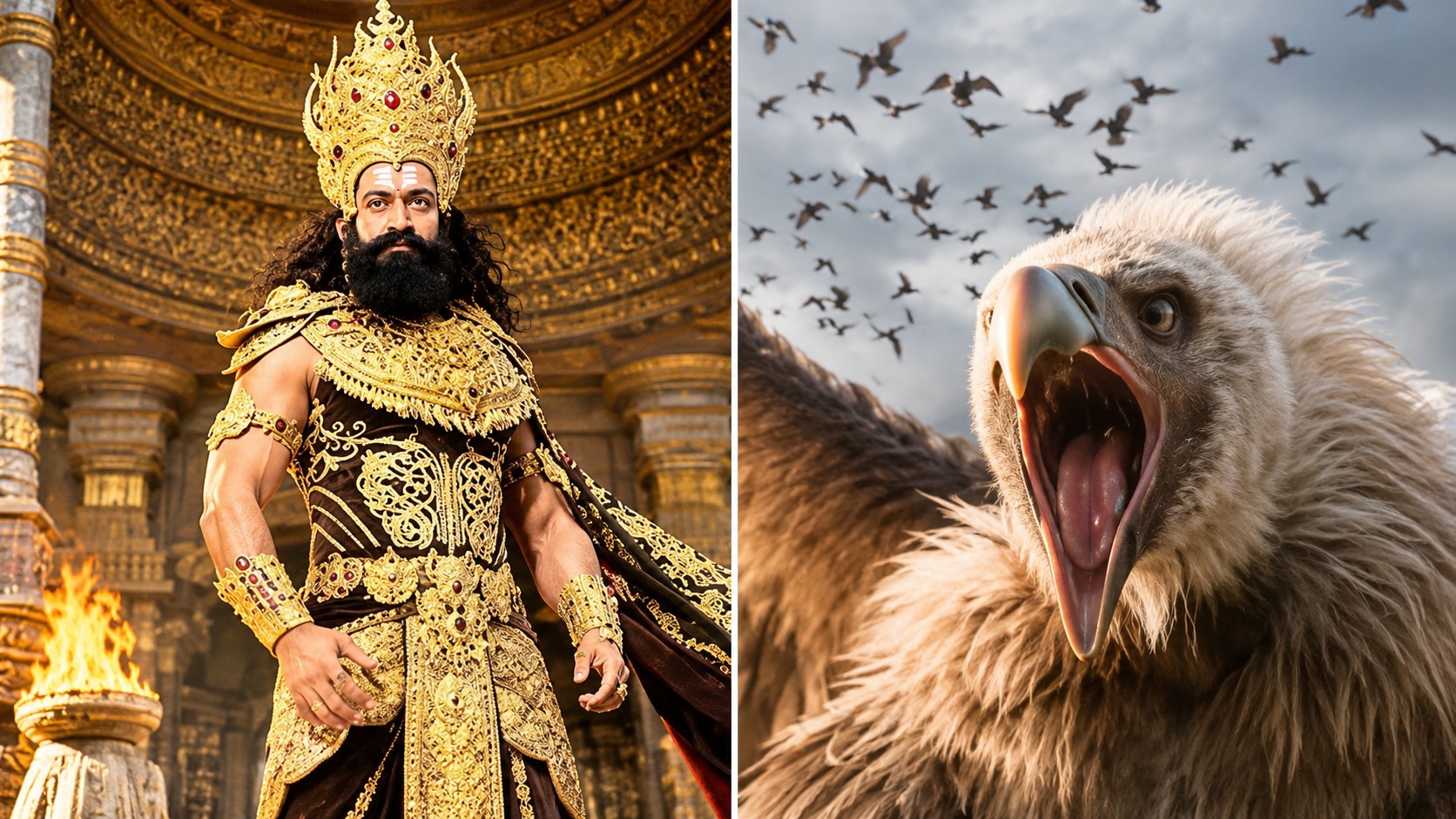
Bringing the epic world of the Ramayana to the big screen has required years of planning, creativity and technical effort. Director Nitesh Tiwari has now shared an interesting detail about the scale of the upcoming film, revealing that a single action sequence featuring Ravana and Jatayu took six and a half years to complete.
In an interaction with Shreyas Media, the filmmaker explained how thousands of artists and technicians contributed to creating the sequence. His revelation offers a glimpse into the extensive work behind one of the film's most important moments and highlights the effort involved in producing a large-scale visual spectacle.
One Action Sequence Took Six and a Half Years
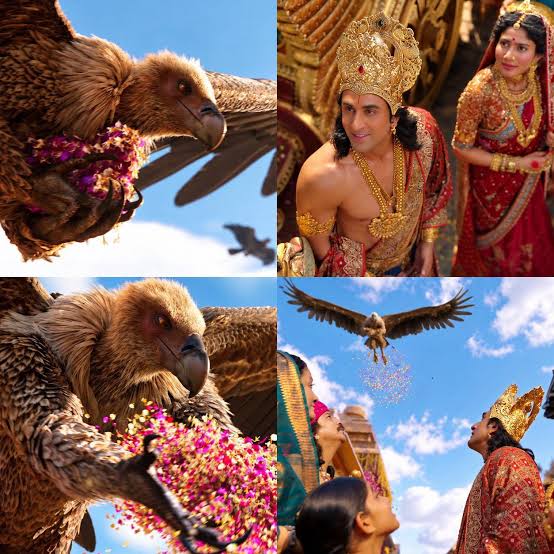
Speaking about the Ravana-Jatayu battle, Nitesh Tiwari explained that the process began with an initial briefing to an artist and continued until the entire sequence was completed.
He said, “You know how much time it has taken for us to finish the Ravana and Jatayu fight? From the time I briefed the previous artist to the time we finished the whole thing, six and a half years. One action sequence.”
The director further emphasised that the amount of work involved was difficult to explain briefly. He added that thousands of people had contributed to creating the sequence from scratch.
The revelation highlights how visual effects-heavy filmmaking involves much more than shooting actors in front of cameras. Concept development, character design, digital environments, animation and repeated revisions can take years before a sequence reaches its final form.
Pushpak Viman Took Nearly Two Years to Design
Nitesh also discussed the creative process behind Ravana's legendary flying vehicle, the Pushpak Viman. According to the director, the team spent close to two years developing and finalising its design.
The filmmakers reportedly explored around 40 to 50 different designs before selecting the version that appears in the film. The final design was considerably different from the team's original concept.
Nitesh explained that the Ravana-Jatayu fight had initially been developed around an earlier version of the Pushpak Viman. When the team eventually settled on a new design, several elements of the action sequence had to be reconsidered.
This meant that the artists had to revisit the choreography and make multiple adjustments to ensure that the flying vehicle and the movements during the battle worked together visually.
Why the Team Wanted a Different Pushpak Viman
The director also explained that the team did not want the Pushpak Viman to look like an ordinary imaginary aircraft. Instead, they wanted its design to have a sense of logic and scientific detail.
Nitesh said the team believed there was science behind the events and technologies described in the epic. That approach influenced the way they imagined the flying vehicle and developed its final appearance.
The repeated design process was therefore not simply about making the aircraft visually impressive. The filmmakers wanted an appearance that audiences could believe was capable of flying within the world created for the film.
The decision to change the design also explains why the Ravana-Jatayu battle required so many revisions. Even a change in the structure of the Pushpak Viman could affect the movement, framing and choreography of an entire action sequence.
Ranbir Kapoor Highlights the Efforts of VFX Artists
The scale of the film's visual effects has also been discussed by its lead actor, Ranbir Kapoor. The actor has spoken about the hard work of VFX artists and expressed disappointment when elaborate visual effects are casually dismissed as AI-generated.
He pointed out that thousands of artists work for long hours to perfect even a single frame. His comments underline the importance of recognising the people working behind the scenes to create large-scale cinematic experiences.
With Ramayana, the makers are attempting to bring a familiar epic to the screen through extensive visual effects and detailed world-building. The effort behind the Ravana-Jatayu battle is one example of the production's technical ambition.
Ranbir Kapoor, Yash and Sai Pallavi Lead the Cast
Directed by Nitesh Tiwari, Ramayana features Ranbir Kapoor as Lord Rama, Sai Pallavi as Goddess Sita and Yash as Ravana. Sunny Deol plays Hanuman, while Ravie Dubey portrays Lakshman.
The film is being produced by Namit Malhotra's Prime Focus Studios in collaboration with DNEG and Yash's Monster Mind Creations. Its music is composed by Hans Zimmer and AR Rahman.
The project is planned as a two-part cinematic adaptation of the Indian epic, with the first instalment scheduled for a worldwide theatrical release on November 5, 2026. The second part is planned for a later release.
Ramayana's Visual Spectacle Raises Expectations
Nitesh Tiwari's revelation about the six-and-a-half-year effort behind one action sequence has added another dimension to the anticipation surrounding Ramayana. The nearly two-year design process for the Pushpak Viman and the involvement of thousands of artists demonstrate the scale of preparation behind the film.
While audiences will ultimately judge the finished spectacle on screen, the director's comments offer a rare look at the time and effort required to recreate an epic battle for modern cinema.
With Ranbir Kapoor as Rama and Yash as Ravana, the film is expected to be one of the major theatrical releases of 2026.
Click here for the latest news from Bollywood, Hollywood, South Film Industry, Bhojpuri and TV world… Click here to join the Facebook Page, Twitter Page, YouTube page, and Instagram of Bollywood Mascot!
Leave a Comment