


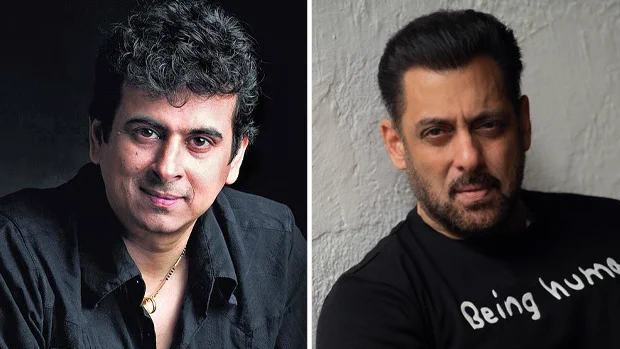
Singer and Euphoria frontman Palash Sen has sparked a debate in Bollywood after responding to Salman Khan’s recent remarks about paid public relations campaigns and online trolling. While Salman criticised the practice of targeting celebrities and films through alleged negative PR, Palash questioned whether the superstar himself had contributed to the same culture over the years.

In an interview with SCREEN, Palash acknowledged that speaking openly about the issue was a bold move by Salman. However, he argued that problems within the film industry often begin with influential people rather than those lower down the hierarchy.
His comments have reignited a conversation about celebrity image management, online criticism and the growing difficulty of distinguishing genuine public opinion from potentially paid campaigns.
Palash Sen Says Salman Khan Was Part of the Problem
Reacting to Salman’s comments, Palash alleged that established stars have played a role in the PR culture that now faces criticism. He suggested that influential people within Bollywood cannot completely distance themselves from practices that may have helped shape the industry over the years.
“Problems never arise from the bottom of the hierarchy; it starts from the top,” Palash said during the interview.
He went on to suggest that people who have maintained powerful positions in the film industry for years have often worked with PR professionals. His remarks were framed as criticism of the wider system, although he directly questioned Salman’s position on the issue.
Palash also acknowledged that Salman speaking publicly about paid negative campaigns was significant. However, he questioned whether the actor could criticise a practice without addressing the role he allegedly played in its development.
These are Palash’s allegations and opinions; they do not independently establish that Salman Khan personally organised or funded negative PR campaigns.
What Salman Khan Said About Paid Negative PR
The controversy began after Salman discussed online trolling and negative publicity during a recent Bigg Boss 20 Weekend Ka Vaar episode.
The actor criticised people who use social media to attack celebrities, particularly when a film fails to perform well at the box office. He also spoke about allegations that certain industry figures encourage negative campaigns against rival actors or films.
Salman suggested that paid online attacks can turn criticism into a business, allowing people to make money by damaging another person's reputation. He also questioned the ethics of those who participate in such practices.
During the same discussion, Salman defended Katrina Kaif amid online comments about her appearance following childbirth. He also spoke against personal attacks directed at actors over their looks.
His remarks drew attention because they addressed an issue that has become increasingly contentious in the entertainment industry: whether online criticism reflects genuine audience reactions or is sometimes influenced by organised campaigns.
Palash Sen Questions Whether Salman’s Remarks Were Scripted
Palash did not stop at questioning Salman’s alleged connection to the PR culture. He also raised doubts about the setting in which the actor made his comments.
Since the discussion took place on Bigg Boss 20, Palash wondered whether Salman’s remarks were entirely spontaneous or planned as part of the programme.
He said it had become increasingly difficult to determine whether public statements by celebrities were genuine expressions of opinion or part of a carefully managed presentation.
Palash did not claim to know whether Salman’s comments had been scripted. Instead, he questioned the uncertainty surrounding such moments and suggested that audiences increasingly struggle to distinguish an authentic reaction from a planned television segment.
His observation reflects a wider debate about celebrity interviews and reality television, where entertainment, publicity and personal opinion can sometimes overlap.
Paid PR Campaigns and Bollywood’s Image Problem
The debate surrounding Salman and Palash highlights the growing influence of digital publicity in Bollywood. Actors and filmmakers rely on public relations teams to promote films, manage media coverage and maintain their public images.
However, allegations of paid negative PR have raised concerns about the possibility of manipulating online conversations to damage competitors. Critics argue that such campaigns can make it difficult for audiences to identify authentic reviews, genuine criticism and coordinated attacks.
Palash recalled an instance involving a film trailer by a prominent female actor that reportedly received more dislikes than likes. He said the episode raised questions about whether the response was organic or influenced by organised activity.
The singer suggested that the uncertainty surrounding online engagement has made it harder for artists to trust what they read about their work.
At the same time, negative reviews and criticism are not automatically evidence of a paid campaign. Establishing whether an online campaign has been funded or coordinated requires evidence rather than assumptions based on reactions alone.
Why Palash Sen Chose to Stay Away From Bollywood Politics
Palash also explained that the politics of the Mumbai film industry was one reason he preferred not to live in the city. He said he was uncomfortable with the idea of joining professional camps or flattering influential people to advance his career.
The singer, who founded Euphoria in 1998, built his reputation through independent music and songs such as Dhoom Pichuck Dhoom and Maaeri. He also appeared in the 2002 film Filhaal, which starred Tabu and Sushmita Sen.
Reflecting on his career, Palash suggested that he chose a different path rather than becoming involved in the industry's internal power dynamics.
His comments underline the challenges faced by independent musicians and performers navigating an entertainment industry where publicity, networking and relationships can significantly influence visibility.
Bollywood’s Paid PR Debate Continues
Palash Sen’s remarks have added another perspective to the debate initiated by Salman Khan’s comments on Bigg Boss 20. While Salman has criticised alleged paid negative campaigns, Palash has questioned whether influential figures in the industry can separate themselves from the culture they now condemn.
Neither the broader allegations of paid campaigns nor Palash’s claims about Salman should be treated as established facts without supporting evidence.
The exchange nevertheless highlights a growing concern in entertainment: audiences want to know whether the opinions and reactions they encounter online are genuine.
As Bollywood continues to rely heavily on digital promotion, the debate over transparency, celebrity influence and the ethics of public relations is likely to remain relevant.
Click here for the latest news from Bollywood, Hollywood, South Film Industry, Bhojpuri and TV world… Click here to join the Facebook Page, Twitter Page, YouTube page, and Instagram of Bollywood Mascot!
Leave a Comment