


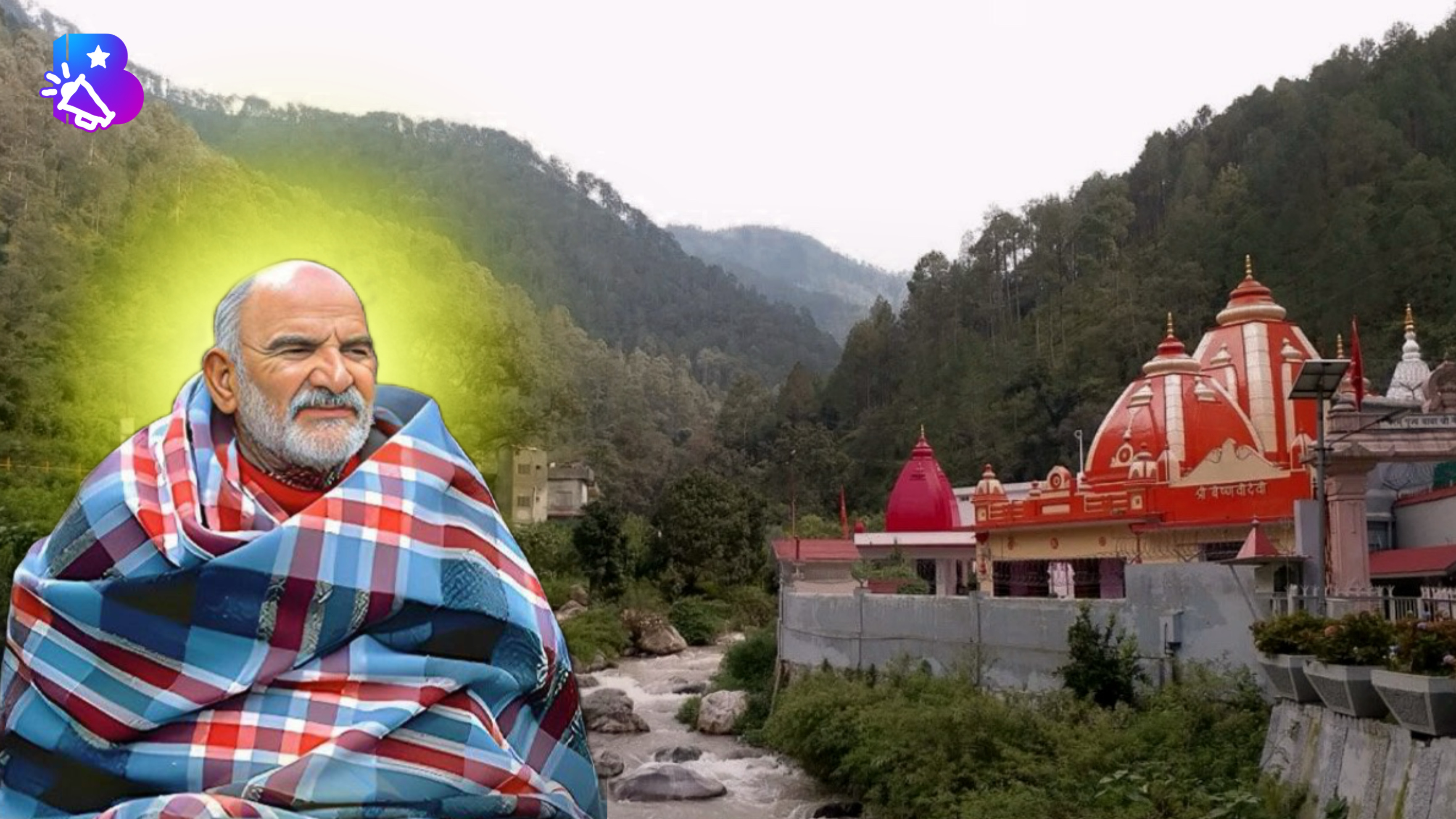
The spiritual presence of Neem Karoli Baba life story continues to inspire millions of seekers, thinkers, and entrepreneurs around the world. Known affectionately to his followers as "Maharaj-ji," he never wrote books, never gave long public lectures, and never sought fame. He wrapped himself in a simple woolen blanket, treated every visitor as family, and shared a timeless message: "Love all, feed all, serve all, and remember God."
Even decades after taking Mahasamadhi in 1973, his ashrams—especially Kainchi Dham in the hills of Uttarakhand—draw people from every walk of life seeking peace, purpose, and clarity.
Early Life, Birth, And Family
Maharaj-ji was born around the year 1900 in the small village of Akbarpur in Firozabad district, Uttar Pradesh. Born into a prosperous and respected Brahmin family, his birth name was Lakshmi Narayan Sharma. From early childhood, he showed little interest in material comforts, often slipping away into deep prayers and contemplation.
At around eleven years of age, according to local tradition, his family arranged his marriage to Ram Beti Sharma. Soon after, he renounced home to wander as an ascetic, meditating in forests and caves across northern India. However, following his father's heartfelt plea, he returned to live a balanced householder life. He raised two sons and a daughter while remaining entirely detached from worldly desires, dividing his time between family responsibilities, rigorous spiritual practice, and selfless service.
How He Got The Name Neem Karoli Baba
A famous incident early in his journey gave him the name by which he is known globally. Traveling on a train without a ticket, a British conductor forced Baba to step off at a remote halt near the village of Neem Karoli (Farrukhabad, UP).
Baba sat quietly under a tree with his walking stick. When the engine crew tried to resume the journey, the train refused to move. Engineers checked every mechanical component, but the locomotive would not budge an inch. A local passenger recognized the holy man and told the railway staff that the train would not start until Baba was invited back on board.
The conductor apologized and respectfully invited Maharaj-ji back into the train carriage. Baba agreed on two conditions: the railway authorities must build a station for the poor villagers of Neem Karoli, and railway staff must treat travelers with kindness. Once Baba stepped back onto the train, it started smoothly. A small station was later built there, and locals began calling him Neem Karoli Baba. 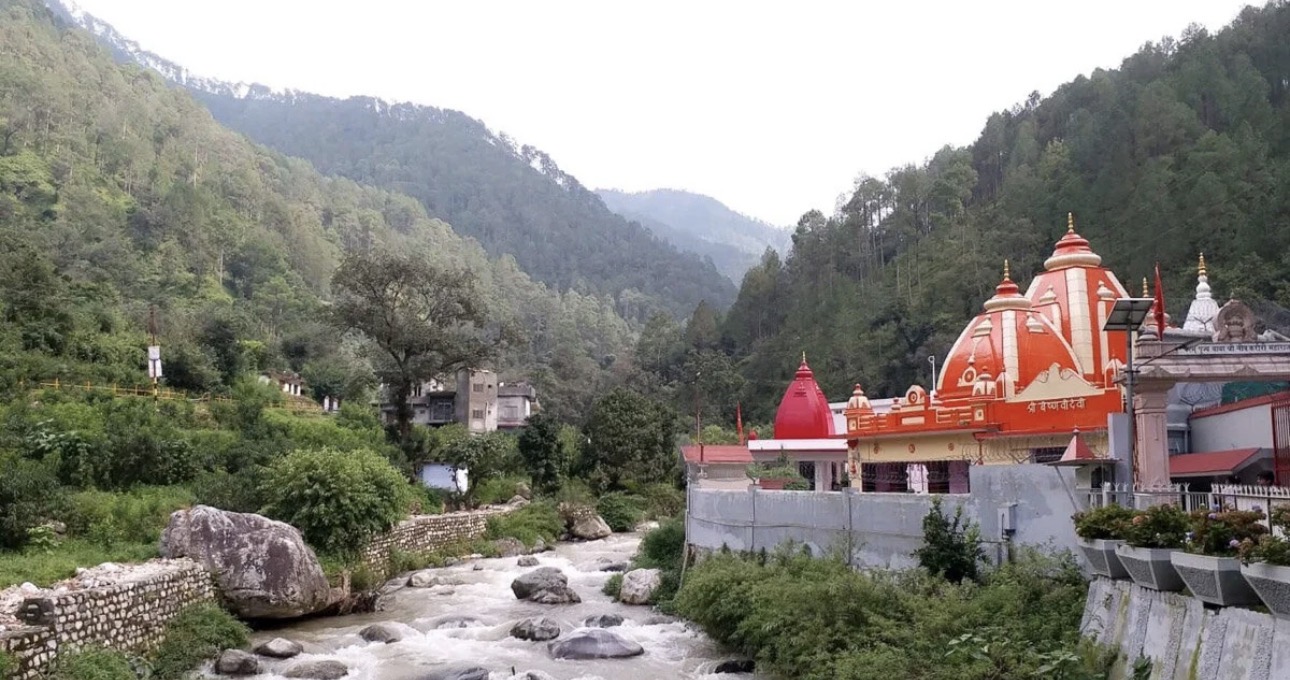
Unforgettable Miracles And Stories Of Grace
Maharaj-ji’s devotees hold him as an incarnation of Lord Hanuman, witnessing numerous instances of grace and healing:
- Turning River Water Into Ghee: During a large bhandara (community feast) at Kainchi Dham, the cooks ran out of pure ghee. Baba instructed his devotees to fetch cans of water from the flowing river beside the ashram and pour it into the hot frying pans. As soon as the water touched the pans, it turned into pure clarified ghee, allowing the food service to continue uninterrupted. The next morning, Baba instructed them to return an equal amount of ghee back to the river.
- Absorbing Pain Through The Blanket: Devotees frequently noticed that Baba's woolen blanket seemed to absorb negative energies and physical suffering. A well-known story recounts a night when Baba tossed and turned in agony, groaning under his blanket. Miles away on a battlefield, a devotee soldier survived a fatal explosion, feeling an invisible shield protect him while the blast energy was mysteriously absorbed elsewhere.
- Healing The Sick Without Medicine: Countless devotees suffering from terminal illnesses found relief simply through a piece of fruit handed out as prasad or a gentle pat on the head. Baba always deflected credit, telling them that true healing comes from faith and the name of God.
Global Devotees: Silicon Valley Leaders At Kainchi Dham
One of the most fascinating aspects of Maharaj-ji’s influence is how his simple ashram became a sanctuary for pioneers of modern technology and Western culture:
- Steve Jobs: In 1974, a young Steve Jobs traveled to India searching for spiritual meaning. Though Baba had taken Mahasamadhi months earlier, Jobs spent significant time meditating at Kainchi Dham. He later credited this pilgrimage with shaping his minimalist design philosophy, intuition, and life direction.
- Mark Zuckerberg: During a critical period in Facebook's early days when investors were pressuring him to sell the company, Mark Zuckerberg visited Steve Jobs for guidance. Jobs advised him to visit Kainchi Dham and reconnect with his core mission. Zuckerberg traveled to India in 2008, stayed at the ashram, and later spoke about how the quiet time there restored his clarity and conviction to build the platform.
- Ram Dass (Dr. Richard Alpert): The former Harvard psychology professor gave up a prestigious academic career after meeting Neem Karoli Baba. He wrote the international bestseller Be Here Now, introducing millions of Western readers to Indian spirituality, yoga, and meditation.
- Other Notable Visitors: Hollywood actress Julia Roberts embraced Hinduism after seeing a photo of Neem Karoli Baba, explaining that she felt an instant, unexplainable sense of peace. Larry Brilliant, the epidemiologist who helped eradicate smallpox for the World Health Organization, worked in public health directly following Baba’s guidance.
'Hanuman Ansh' Movie: A Low-Budget Film Becomes A Box Office Giant
The timeless appeal of Maharaj-ji has recently created history in Indian cinema with the release of the devotional film Hanuman Ansh. Made on an ultra-modest budget of roughly ₹2 crore by director Vishal Chaturvedi and featuring FTII graduate Shobhinav Satya in the lead role, the movie faced zero promotional fanfare and had a modest opening.
However, heartfelt word-of-mouth spread rapidly among audiences. Devotees across the country shared videos of full auditoriums where people were moved to tears by Baba's life and miracles. Defying conventional industry logic, the film sustained remarkable momentum week after week, crossing over ₹200 crore at the domestic box office and nearing ₹250 crore worldwide.
The success of Hanuman Ansh shows that stories centered on genuine faith, humble service, and spiritual truth continue to resonate deeply with modern viewers. Neem Karoli Baba's legacy remains alive—not through monuments or dogma, but in millions of hearts inspired to live with love, humility, and service.
Click here for the latest news from Bollywood, Hollywood, South Film Industry, Bhojpuri and TV world… Click here to join the Facebook Page, Twitter Page, YouTube page, and Instagram of Bollywood Mascot!




Leave a Comment