


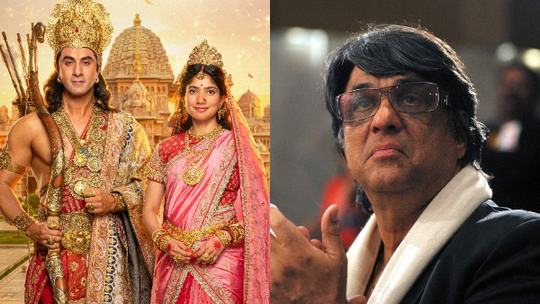
The controversy surrounding Sai Pallavi's portrayal of Goddess Sita in Nitesh Tiwari's Ramayana has taken another turn. Veteran actor Mukesh Khanna has strongly criticised the film's makers for showing Sita fighting demons in an action sequence. Questioning the creative liberties taken with the Indian epic, the actor said filmmakers should be careful while changing characters and episodes associated with religious and cultural traditions.
Known for his iconic portrayal of Bhishma Pitamah in the television series Mahabharat and as the superhero Shaktimaan, Mukesh Khanna shared his views in a video on his YouTube channel, Bheeshm International. His remarks have brought renewed attention to the debate over whether the film's interpretation of Sita remains faithful to familiar versions of the Ramayana.
Mukesh Khanna Questions Creative Changes in Ramayana
In his video, Khanna questioned why discussions around the film were largely focused on its production budget and box-office performance rather than the accuracy of its storytelling.
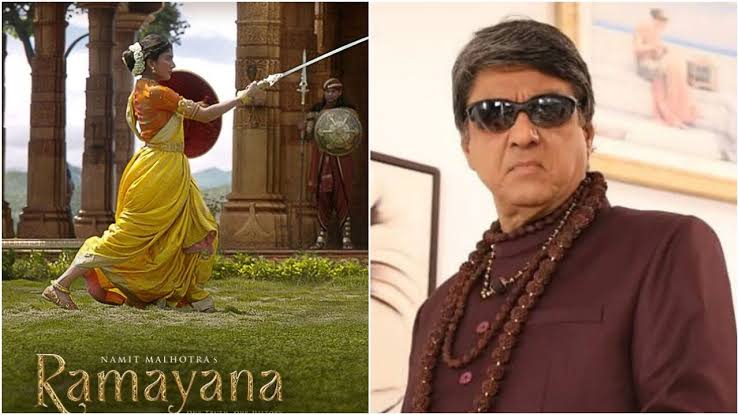
He argued that the Ramayana and Mahabharata are not ordinary fictional stories and that filmmakers should think carefully before adding or removing episodes to suit their cinematic vision.
The actor also questioned whether it was appropriate to introduce personal interpretations into epics that hold deep significance for millions of people. In his view, commercial ambitions should not take priority over the responsibility of representing such stories respectfully.
His criticism was not limited to the action sequence involving Sita. He raised a broader concern about the freedom filmmakers take while adapting religious texts for the big screen.
Why Mukesh Khanna Objected to Sai Pallavi's Sita
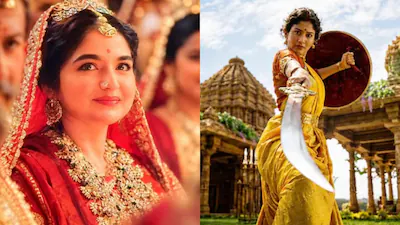
Khanna's strongest objection was directed at the scene in which Sai Pallavi's Sita is shown fighting demons alongside Lord Rama during their forest exile.
The actor argued that this particular portrayal does not appear in the Valmiki Ramayana. Referring to his understanding of the epic, he said Sita is traditionally represented through devotion, dignity and service, rather than as a character who joins Rama in battlefield combat.
Comparing the portrayal to the image of a warrior such as Rani Lakshmibai, Khanna questioned why the filmmakers had chosen to show Sita fighting.
He also raised a question about the narrative itself: if Sita was being presented as a fighter, why did she not resist when Ravana abducted her?
Khanna's comments reflect his personal interpretation of the character and his expectations from a cinematic adaptation of the epic. The warrior portrayal, however, has also received support from viewers who believe that Sita's divine strength can be represented through a more active role.
Actor Reacts to Adbhuta Ramayana Explanation
The filmmakers have previously explained that Sita's warrior portrayal draws inspiration from the Adbhuta Ramayana, a traditional retelling that presents a powerful form of Sita associated with divine Shakti.
Director Nitesh Tiwari has spoken about taking inspiration from different versions of the epic while developing the film's characters. He explained that the warrior dimension of Sita was drawn from the Adbhuta Ramayana.
Producer Namit Malhotra has also referred to this interpretation while addressing questions about the sequence.
However, Khanna was not convinced by this explanation. He questioned why the makers were using another version of the epic to justify a scene that, according to his understanding, does not appear in Valmiki's account.
He also drew a comparison with other religious texts, questioning whether filmmakers would feel equally comfortable making similar changes to the Quran or the Bible. His argument was that the same sensitivity should be applied while adapting Hindu religious epics.
Expressing his anger towards the makers, Khanna concluded his criticism with the sharp remark, "Sharam aani chahiye aapko."
Mukesh Khanna Has Not Watched the Film
An important detail in the controversy is that Khanna has clarified that he has not watched Ramayana in its entirety. His criticism is based on the promotional material, the particular fight sequence being discussed publicly and the explanations shared by the filmmakers.
This distinction is significant because his comments should be understood as criticism of the scene and the creative decisions he has heard about, rather than a review of the complete film.
The makers have not issued an official response to his latest remarks at the time of writing.
Debate Over Sai Pallavi's Warrior Sita Continues
The discussion surrounding Sai Pallavi's portrayal began even before the film's theatrical release. After the action sequence became public, some viewers questioned whether Sita should be shown participating in a battle alongside Rama.
Others defended the creative decision by pointing towards different versions of the Ramayana, particularly the Adbhuta Ramayana. In that text, Sita is associated with a fierce manifestation of divine Shakti and takes on a powerful form to defeat the thousand-headed Ravana.
However, the episode in that text is different from the forest battle shown in the film. This distinction has become an important part of the ongoing discussion.
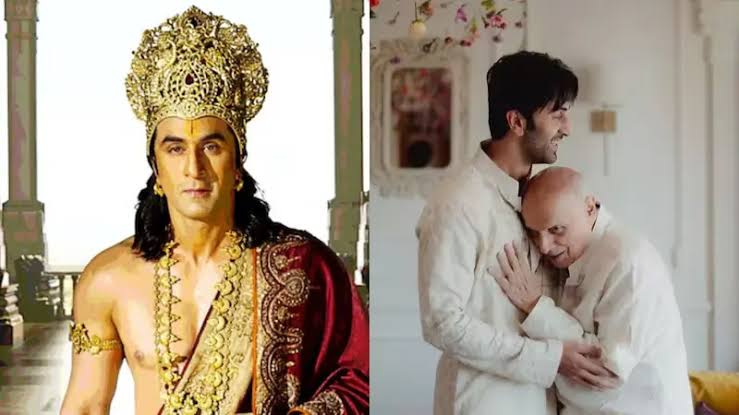
The controversy also follows earlier criticism from Khanna over Ranbir Kapoor's portrayal of Lord Rama. He had previously questioned certain action sequences involving the character, arguing that Rama should be presented in keeping with the dignity associated with Maryada Purushottam.
About Nitesh Tiwari's Ramayana
Directed by Nitesh Tiwari and produced by Namit Malhotra, Ramayana features Ranbir Kapoor as Lord Rama, Sai Pallavi as Sita, Yash as Ravana and Ravi Dubey as Lakshman. Sunny Deol plays Lord Hanuman, while Indira Krishnan appears as Mata Kaushalya.
The ambitious two-part adaptation has attracted attention for its scale, visual effects and international creative collaboration. The first instalment was released in theatres on November 5, 2026, while the second part is planned for Diwali 2028.
With Mukesh Khanna's latest remarks, the debate over artistic freedom and faithfulness to traditional narratives has gained fresh momentum. The discussion highlights the challenge filmmakers face when adapting an epic that has been retold across generations and carries different interpretations in India's cultural traditions.
Click here for the latest news from Bollywood, Hollywood, South Film Industry, Bhojpuri and TV world… Click here to join the Facebook Page, Twitter Page, YouTube page, and Instagram of Bollywood Mascot!
Leave a Comment