


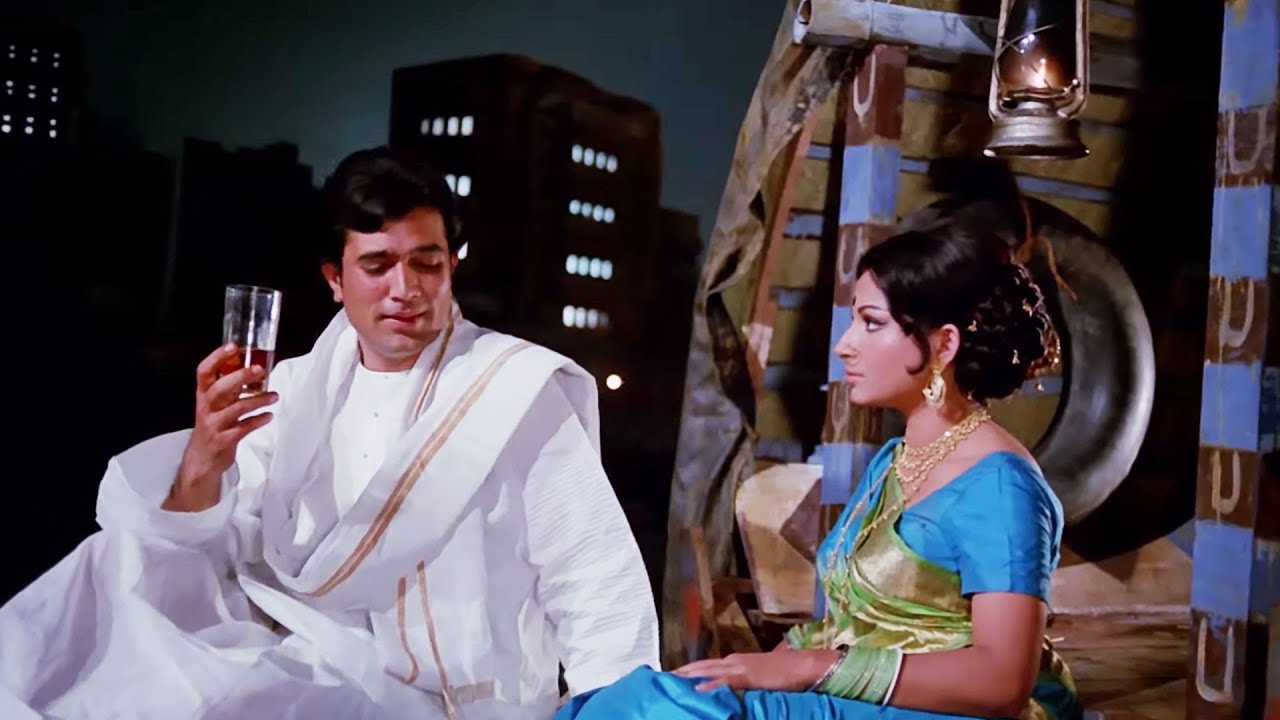
Some songs become timeless because of their music, some because of their lyrics, and some because of the unforgettable chemistry between the actors. Rajesh Khanna and Sharmila Tagore’s Chingari Koi Bhadke from the 1972 film Amar Prem is one such classic.
The song, beautifully sung by Kishore Kumar, written by Anand Bakshi and composed by R.D. Burman, remains one of Hindi cinema’s most remembered melodies. On screen, Rajesh Khanna and Sharmila Tagore appear sitting together on a boat, with the Howrah Bridge and Hooghly River creating a stunning backdrop.
But the reality behind the filming is surprisingly different. Much of what looks like the Hooghly River was actually recreated inside a Mumbai studio.
1. The Howrah Bridge Wasn’t Always the Real Location
When viewers watch Chingari Koi Bhadke, it is easy to assume that the entire sequence was filmed in Kolkata. The visuals of the boat, river and Howrah Bridge make the song look like an authentic outdoor shoot.
However, Sharmila Tagore later revealed that the wide and long shots were filmed at the actual location, where the Howrah Bridge and Hooghly River could be seen.
The close and mid-shots were a different story. The filmmakers could not obtain permission to shoot underneath the Howrah Bridge, so they recreated the water environment at Natraj Studio in Mumbai.
This clever combination of real-location footage and studio filming helped create the illusion that the entire song had been shot on the Hooghly.
2. Rajesh Khanna and Sharmila Tagore Shot in a Water Tank
For the studio portions, the makers constructed a large water setup and placed a boat inside it. Rajesh Khanna and Sharmila Tagore then filmed their close and medium shots while sitting in the boat.
The setup may look romantic and picturesque on screen, but the actual shooting conditions were far from glamorous.
According to Sharmila Tagore’s recollection, the shooting continued for several days. Because the water remained in the tank for an extended period, it gradually developed an unpleasant smell and became uncomfortable for the actors and crew.
Yet none of that discomfort is visible in the final song. Rajesh Khanna and Sharmila Tagore maintained the emotional mood of the sequence and delivered the romantic, melancholic expressions required for the song.
3. Kishore Kumar Made the Song Immortal
The visual story behind Chingari Koi Bhadke is fascinating, but the song would not have achieved its legendary status without its music.
Kishore Kumar’s deeply emotional voice perfectly captured the loneliness and pain in the lyrics written by Anand Bakshi. R.D. Burman’s composition added another layer of melancholy to the song.
Rajesh Khanna’s restrained expressions and Sharmila Tagore’s emotional presence complemented the track beautifully. The combination of their performances with Kishore Kumar’s voice turned the sequence into one of the defining musical moments of Amar Prem.
The Magic Was Bigger Than the Reality
The story of Chingari Koi Bhadke is a reminder of how filmmaking can transform ordinary or difficult circumstances into something magical.
What audiences saw as a peaceful boat ride on the Hooghly was partly created inside a Mumbai studio, where the actors had to work in an artificial water setup that became increasingly unpleasant over several days.
Yet when the final footage appeared on screen, none of those difficulties mattered. The combination of Rajesh Khanna and Sharmila Tagore’s chemistry, Kishore Kumar’s unforgettable voice and R.D. Burman’s music created a sequence that has survived for more than five decades.
More than 54 years after Amar Prem, Chingari Koi Bhadke continues to be remembered—not only as a beautiful song, but also as an example of the behind-the-scenes effort that often goes unnoticed in classic Hindi cinema.
Click here for the latest news from Bollywood, Hollywood, South Film Industry, Bhojpuri and TV world… Click here to join the Facebook Page, Twitter Page, YouTube page, and Instagram of Bollywood Mascot!


Leave a Comment